
Transforming a Confusing Healthcare Platform into a Scalable Digital Product
Transforming a Confusing Healthcare Platform into a Scalable Digital Product
Redesigning a healthcare platform that struggled with low transactions, poor user retention, unclear product structure, and weak business scalability into a more intuitive, conversion-driven, and commercially viable digital experience.
Redesigning a healthcare platform that struggled with low transactions, poor user retention, unclear product structure, and weak business scalability into a more intuitive, conversion-driven, and commercially viable digital experience.
Redesigning a healthcare platform that struggled with low transactions, poor user retention, unclear product structure, and weak business scalability into a more intuitive, conversion-driven, and commercially viable digital experience.
Healthcare
Healthcare
Product Strategy
Product Strategy
UX Optimization
UX Optimization
Project Overview
Project Overview
When I joined Easymeds, the problem was never about visual design. The real issue was much deeper: the product was difficult to use, difficult to trust, and even more difficult to scale as a business.
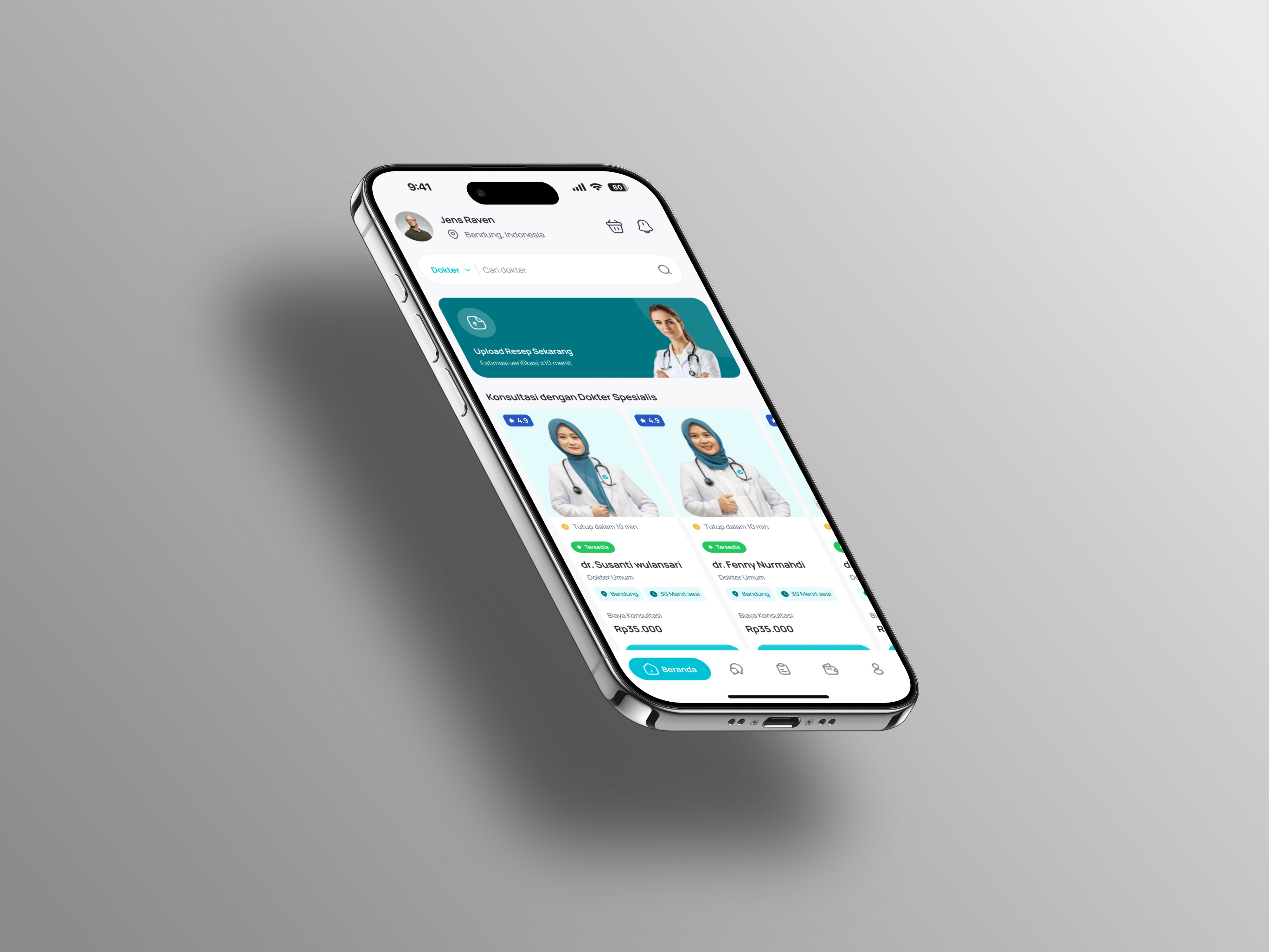
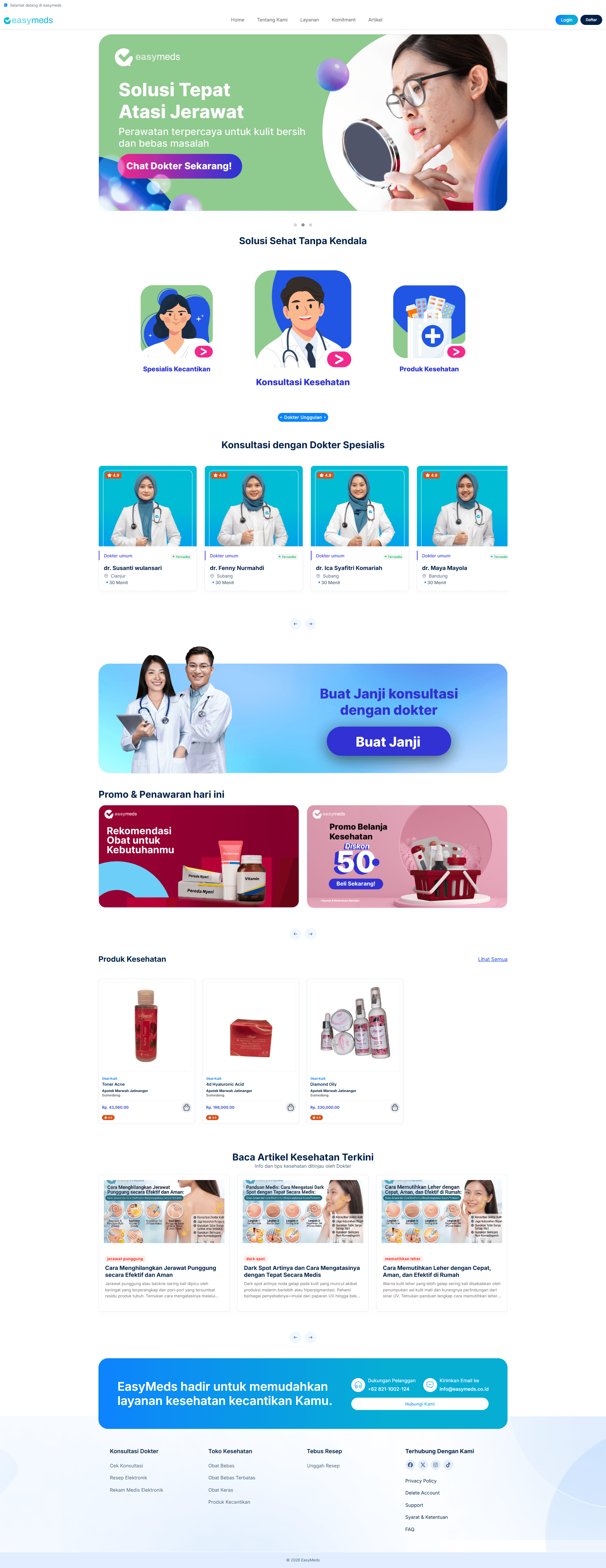
Easymeds was a healthcare platform that had already entered the market, but the product experience was working against the business itself. Users struggled to understand how the platform worked, transactions were not happening consistently, and the web application lacked the clarity needed to convert users into paying customers. The structure was fragmented, information architecture was unclear, core flows were redundant, and navigation created confusion instead of confidence. There was no strong retention loop, and the business model itself felt disconnected from the actual user journey.
This was not a UI problem. This was a product problem.
The company needed more than a redesign, they needed the product to become commercially viable. That became the real objective.
When I joined Easymeds, the problem was never about visual design. The real issue was much deeper: the product was difficult to use, difficult to trust, and even more difficult to scale as a business.
Easymeds was a healthcare platform that had already entered the market, but the product experience was working against the business itself. Users struggled to understand how the platform worked, transactions were not happening consistently, and the web application lacked the clarity needed to convert users into paying customers. The structure was fragmented, information architecture was unclear, core flows were redundant, and navigation created confusion instead of confidence. There was no strong retention loop, and the business model itself felt disconnected from the actual user journey.
This was not a UI problem. This was a product problem.
The company needed more than a redesign, they needed the product to become commercially viable. That became the real objective.
My Role
My Role
I worked as the Product Designer, responsible for translating business problems into product decisions. This project required more than interface improvements. My role involved restructuring the product experience from the ground up, analyzing friction points, rebuilding user flows, redefining information architecture, and aligning the digital experience with actual business goals.
The focus was not simply making the platform look better. It was making the product make sense.
I worked across the full experience strategy, ensuring the platform could support both user adoption and long-term business growth. Every design decision had to answer two questions: can users complete what they came for, and can the business grow because of it?
I worked as the Product Designer, responsible for translating business problems into product decisions. This project required more than interface improvements. My role involved restructuring the product experience from the ground up, analyzing friction points, rebuilding user flows, redefining information architecture, and aligning the digital experience with actual business goals.
The focus was not simply making the platform look better. It was making the product make sense.
I worked across the full experience strategy, ensuring the platform could support both user adoption and long-term business growth. Every design decision had to answer two questions: can users complete what they came for, and can the business grow because of it?
The Problem
The Problem
The existing platform suffered from a common but dangerous issue: it was built feature-first, not experience-first.
From the outside, the product looked functional. But once users entered the system, friction appeared everywhere. The booking process was unclear, information hierarchy made decision-making harder instead of easier, important actions were hidden behind unnecessary steps, and multiple screens repeated the same logic without improving clarity. Users dropped before reaching transaction points because the journey itself created resistance.
There was no strong sense of progression, no clear user confidence, and no reason to return.
Even worse, the business side felt the impact directly. Transactions were low, user retention was weak, and the platform struggled to establish a clear monetization structure because the product itself did not support the business model. The system was technically alive, but commercially, it was stuck.
The existing platform suffered from a common but dangerous issue: it was built feature-first, not experience-first.
From the outside, the product looked functional. But once users entered the system, friction appeared everywhere. The booking process was unclear, information hierarchy made decision-making harder instead of easier, important actions were hidden behind unnecessary steps, and multiple screens repeated the same logic without improving clarity. Users dropped before reaching transaction points because the journey itself created resistance.
There was no strong sense of progression, no clear user confidence, and no reason to return.
Even worse, the business side felt the impact directly. Transactions were low, user retention was weak, and the platform struggled to establish a clear monetization structure because the product itself did not support the business model. The system was technically alive, but commercially, it was stuck.
Strategic Direction
Strategic Direction
The first step was not redesigning screens. It was redefining product priorities.
Instead of treating the project as a visual refresh, I approached it as a product restructuring initiative. The goal was to simplify the experience around the highest-value actions: consultation, appointment booking, payment flow, and long-term engagement.
Every redundant step was questioned. Every unclear decision point was challenged. Every interaction had to justify its existence.
This meant rebuilding the experience around clarity, not around existing assumptions. Users should not need to “learn” how healthcare access works inside the product. The product should feel obvious, because in healthcare, hesitation kills conversion.
The first step was not redesigning screens. It was redefining product priorities.
Instead of treating the project as a visual refresh, I approached it as a product restructuring initiative. The goal was to simplify the experience around the highest-value actions: consultation, appointment booking, payment flow, and long-term engagement.
Every redundant step was questioned. Every unclear decision point was challenged. Every interaction had to justify its existence.
This meant rebuilding the experience around clarity, not around existing assumptions. Users should not need to “learn” how healthcare access works inside the product. The product should feel obvious, because in healthcare, hesitation kills conversion.
Information Architecture
Information Architecture
One of the biggest issues was structural confusion.
The original web app suffered from unclear content hierarchy and disconnected navigation patterns. Users could not easily understand where they were, what to do next, or how the system actually worked. This created invisible friction—the kind users rarely complain about, but quietly leave because of.
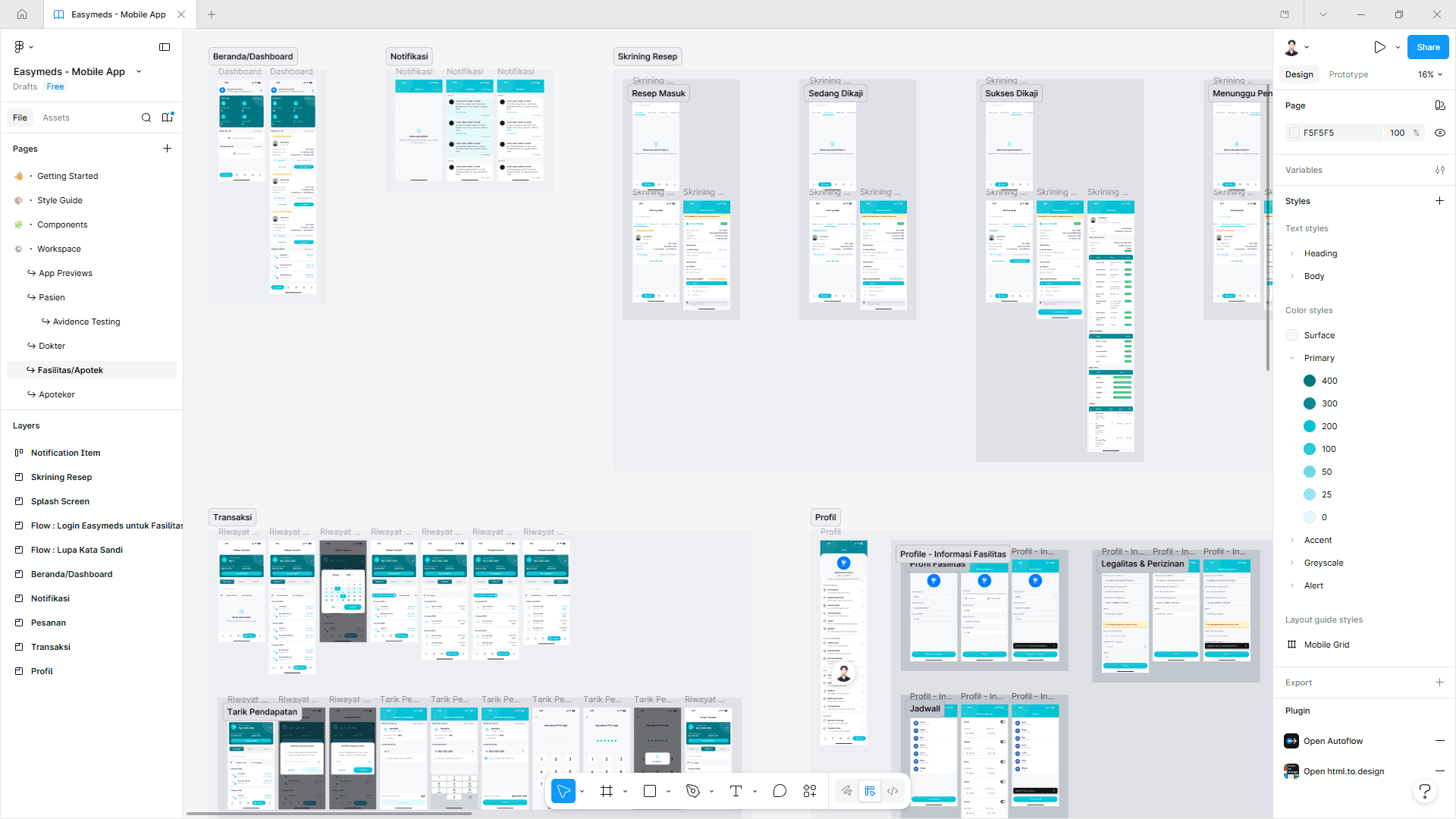
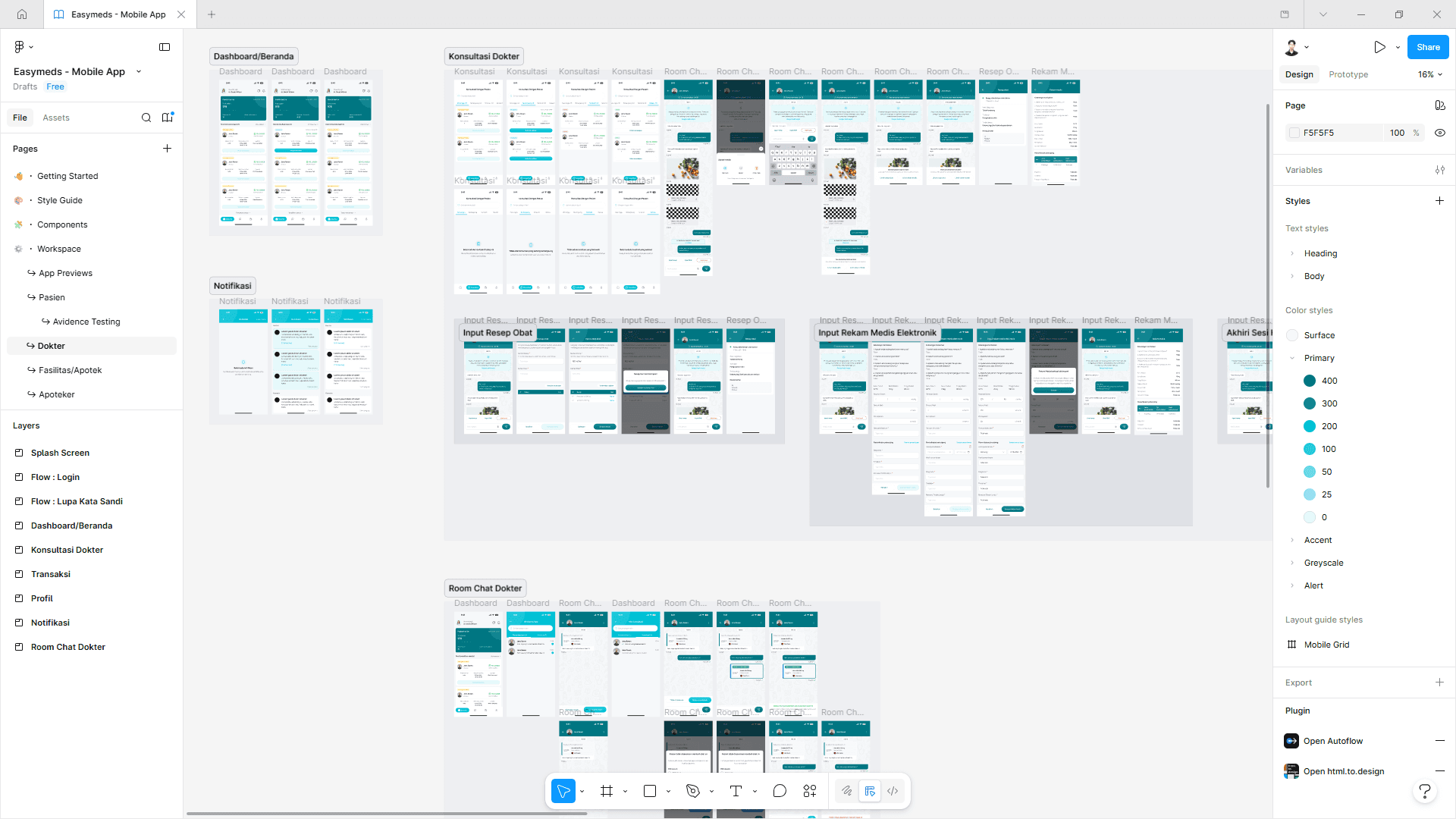
I restructured the information architecture by prioritizing decision paths instead of internal business logic. The platform was redesigned around user intent: finding doctors, understanding services, booking appointments, completing payments, and managing consultation history—not around company departments or backend structure.
This shift made the experience significantly easier to understand and dramatically reduced unnecessary cognitive load. Good information architecture is invisible. Users should feel clarity before they notice design.
One of the biggest issues was structural confusion.
The original web app suffered from unclear content hierarchy and disconnected navigation patterns. Users could not easily understand where they were, what to do next, or how the system actually worked. This created invisible friction—the kind users rarely complain about, but quietly leave because of.
I restructured the information architecture by prioritizing decision paths instead of internal business logic. The platform was redesigned around user intent: finding doctors, understanding services, booking appointments, completing payments, and managing consultation history—not around company departments or backend structure.
This shift made the experience significantly easier to understand and dramatically reduced unnecessary cognitive load. Good information architecture is invisible. Users should feel clarity before they notice design.
Product Flow Optimization
Product Flow Optimization
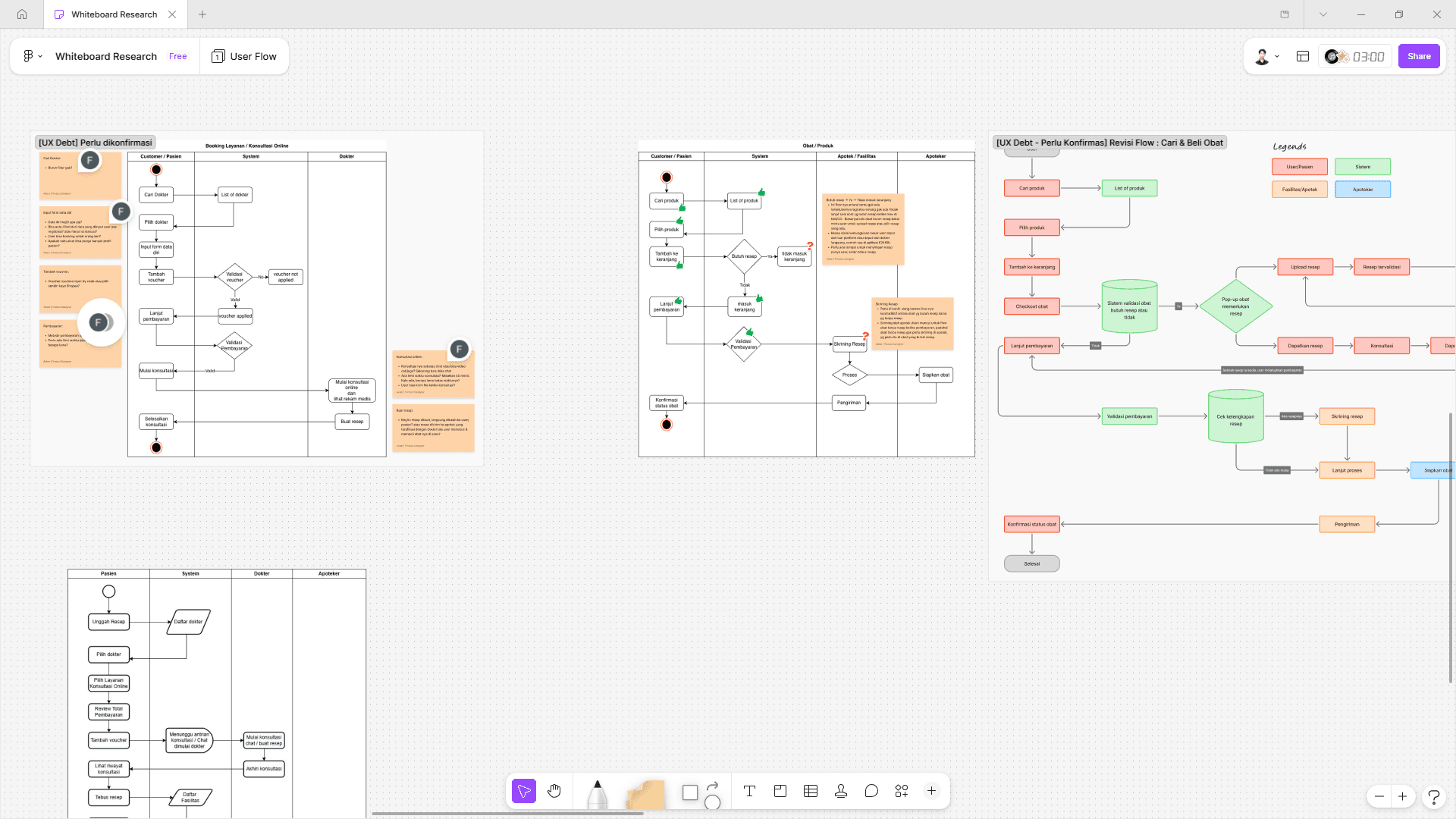
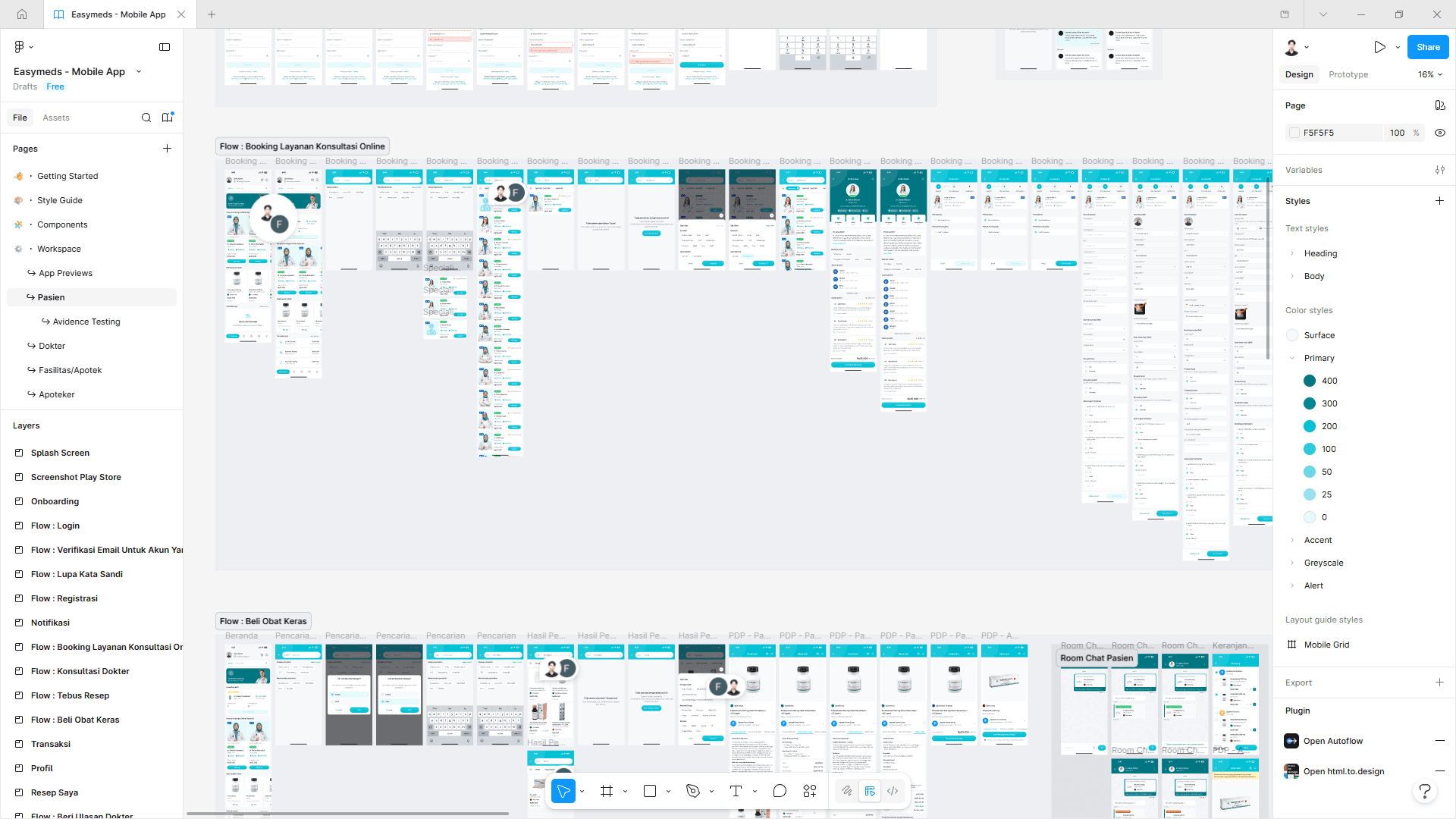
The consultation and booking journey required the most attention.
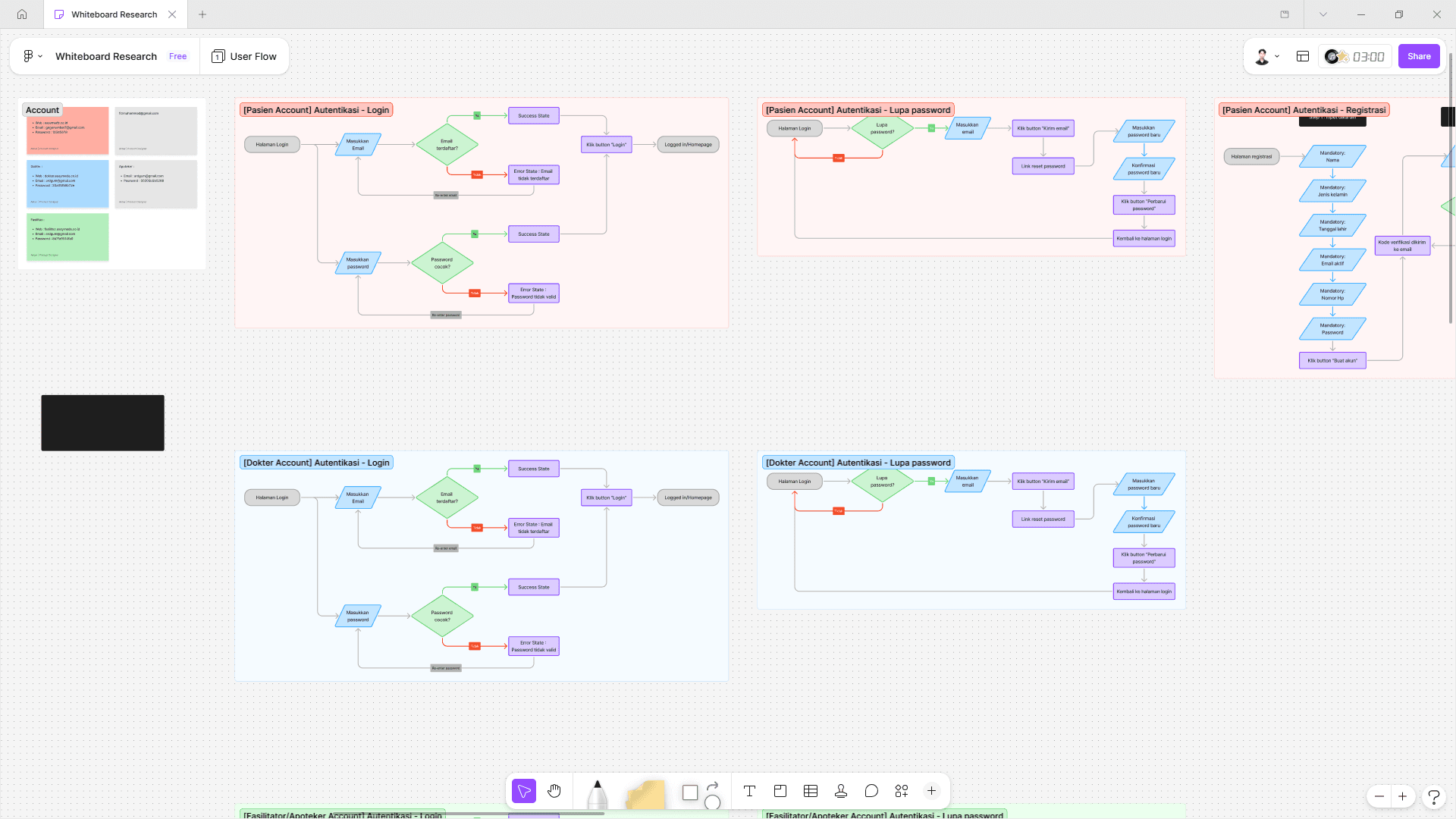
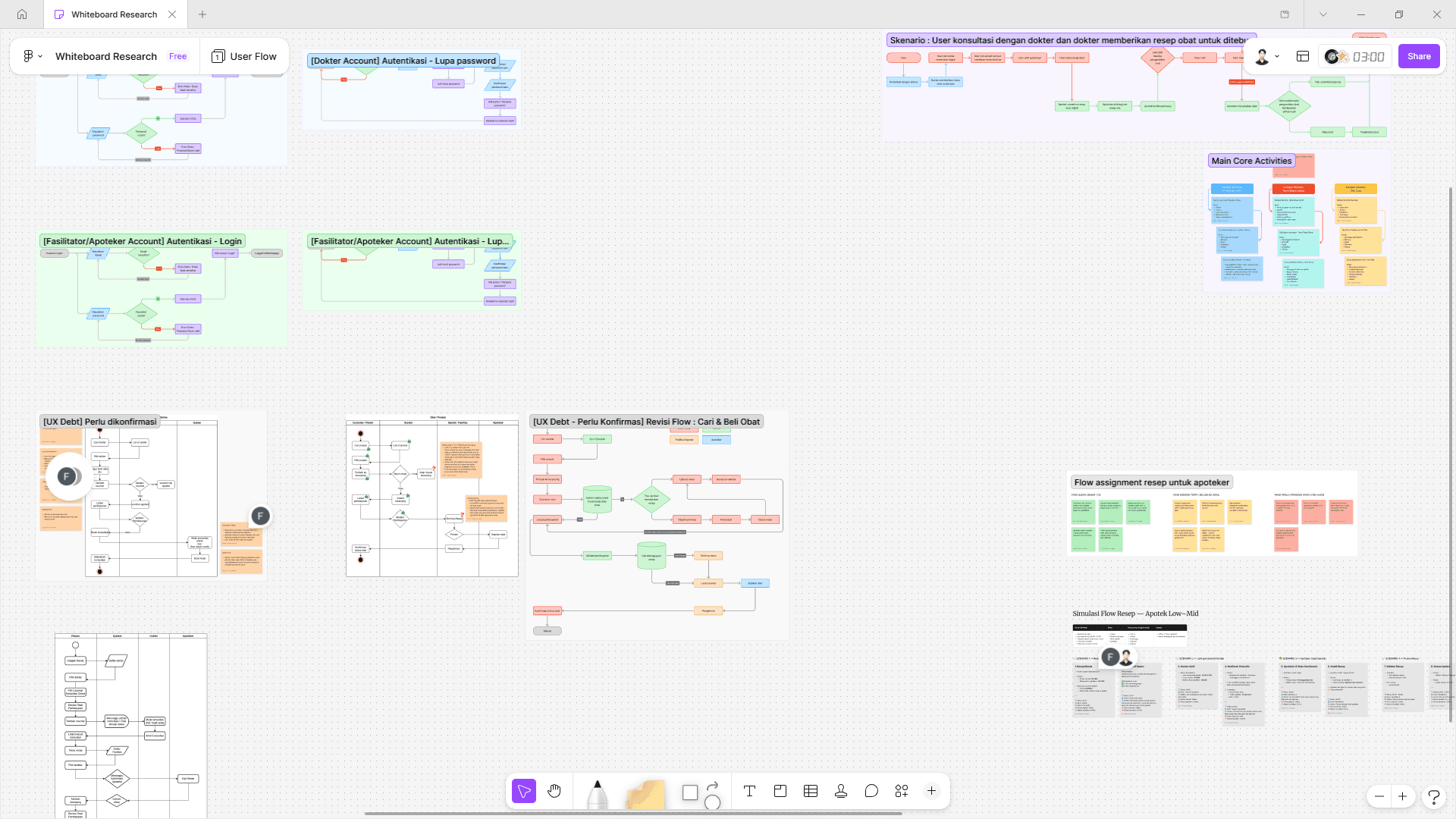
Previously, the flow was fragmented, repetitive, and lacked confidence-building moments. Users often reached hesitation points before payment because the system did not provide enough trust signals or clear progression.
I redesigned the flow to create stronger continuity:
Doctor discovery → schedule visibility → appointment confirmation → payment → consultation history.
Each step was intentionally simplified to reduce decision fatigue and increase completion confidence. The goal was not speed alone. It was certainty.
Especially in healthcare products, users need reassurance more than they need animation. That principle shaped every interaction.
The consultation and booking journey required the most attention.
Previously, the flow was fragmented, repetitive, and lacked confidence-building moments. Users often reached hesitation points before payment because the system did not provide enough trust signals or clear progression.
I redesigned the flow to create stronger continuity:
Doctor discovery → schedule visibility → appointment confirmation → payment → consultation history.
Each step was intentionally simplified to reduce decision fatigue and increase completion confidence. The goal was not speed alone. It was certainty.
Especially in healthcare products, users need reassurance more than they need animation. That principle shaped every interaction.
Designing for Business, Not Just Users
One of the most important parts of this project was aligning UX decisions with business viability.
The original platform had weak transaction performance not because users lacked interest, but because the product failed to guide them toward commitment. A better experience creates better business behavior.
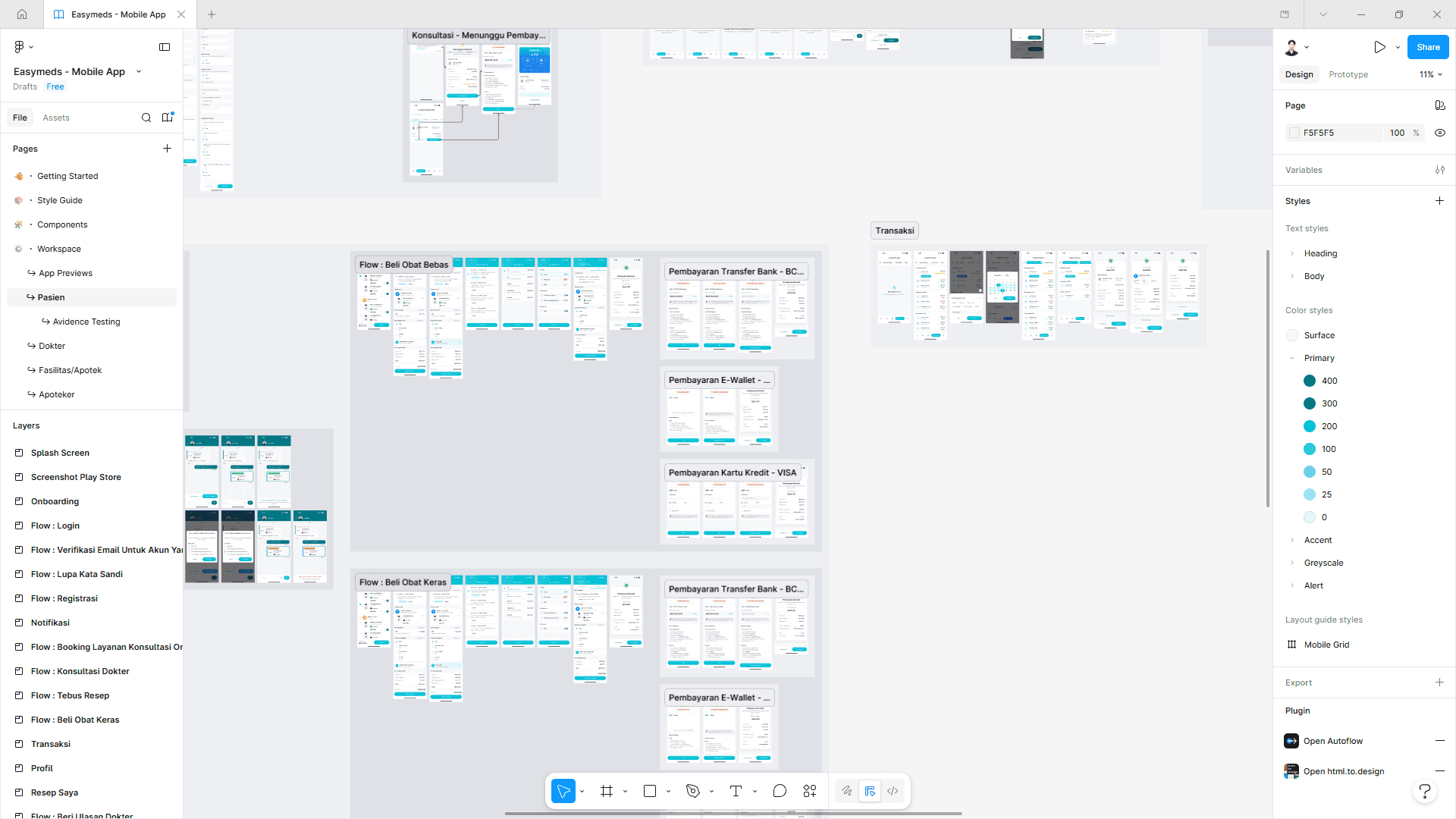
By simplifying conversion points and clarifying service value, the product became easier to monetize. The payment flow felt more trustworthy, the consultation process became more understandable, and the business model itself became easier for stakeholders to defend internally.
Design was no longer supporting the business. Design became part of the business strategy.
That shift changed how the product was discussed at the leadership level.
One of the most important parts of this project was aligning UX decisions with business viability.
The original platform had weak transaction performance not because users lacked interest, but because the product failed to guide them toward commitment. A better experience creates better business behavior.
By simplifying conversion points and clarifying service value, the product became easier to monetize. The payment flow felt more trustworthy, the consultation process became more understandable, and the business model itself became easier for stakeholders to defend internally.
Design was no longer supporting the business. Design became part of the business strategy.
That shift changed how the product was discussed at the leadership level.
Outcome
The redesign created immediate operational improvements.
Stakeholders were able to approve decisions faster because the product direction became clearer and more defensible. Development became more efficient because flows were structured logically and implementation ambiguity was reduced.
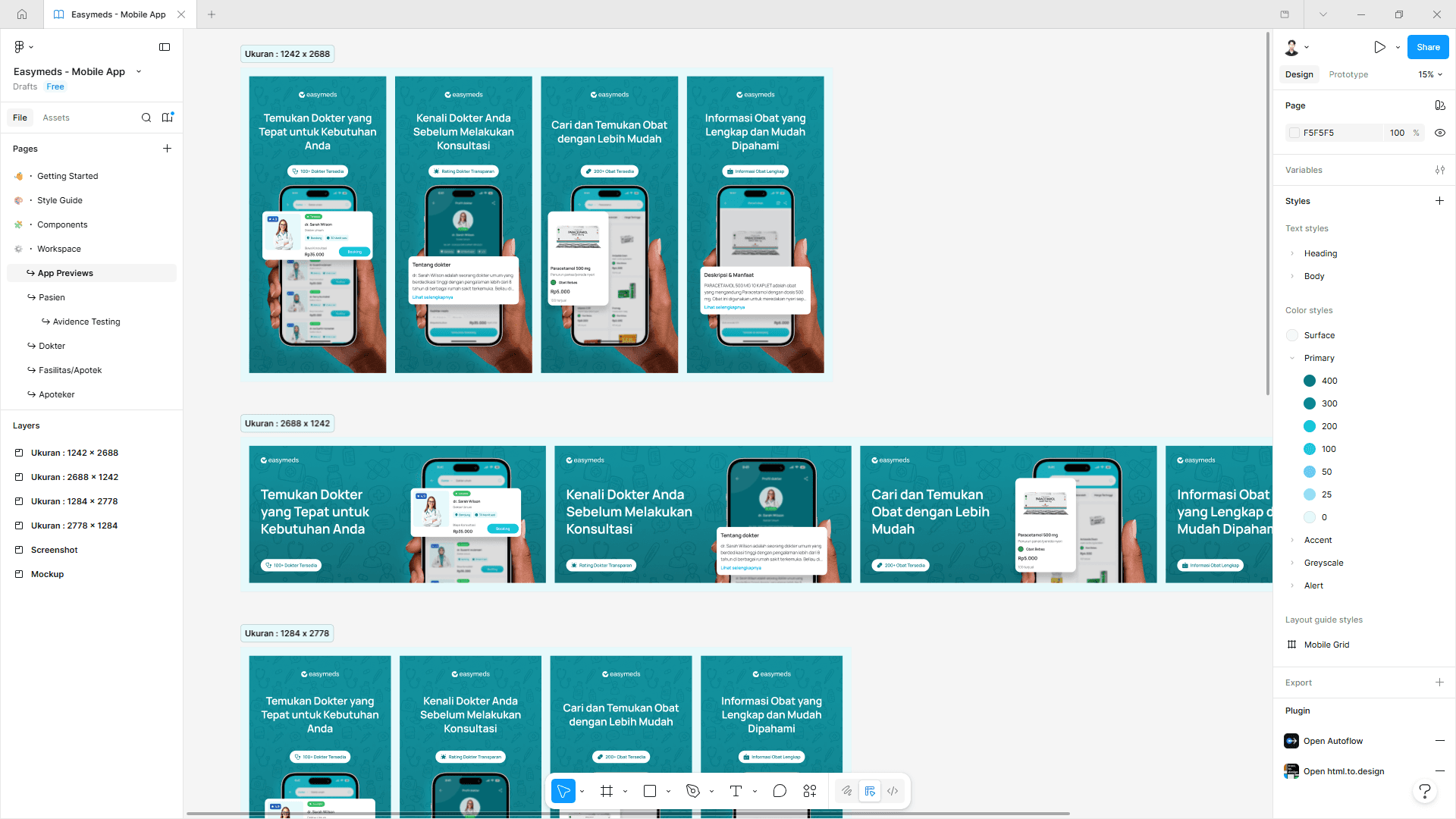
Most importantly, the platform started behaving like a real product instead of a disconnected system. Users could understand the journey more easily, transactions began to happen more consistently, the business model became clearer, and the overall product felt more mature, scalable, and aligned with actual growth.
The redesign did not just improve usability. It improved confidence—internally and externally.
And in product work, confidence drives momentum.
The redesign created immediate operational improvements.
Stakeholders were able to approve decisions faster because the product direction became clearer and more defensible. Development became more efficient because flows were structured logically and implementation ambiguity was reduced.
Most importantly, the platform started behaving like a real product instead of a disconnected system. Users could understand the journey more easily, transactions began to happen more consistently, the business model became clearer, and the overall product felt more mature, scalable, and aligned with actual growth.
The redesign did not just improve usability. It improved confidence—internally and externally.
And in product work, confidence drives momentum.
Reflection
Reflection
This project reinforced something I believe strongly: senior product design is rarely about making things look better. It is about making products work better.
A polished interface means very little if the business cannot grow behind it.
Easymeds taught me that real product design lives in structure, prioritization, and restraint. The most valuable decisions were not the screens I added, but the confusion I removed.
Because users do not remember beautiful interfaces. They remember whether the product helped them move forward.
That is where design creates business value.
This project reinforced something I believe strongly: senior product design is rarely about making things look better. It is about making products work better.
A polished interface means very little if the business cannot grow behind it.
Easymeds taught me that real product design lives in structure, prioritization, and restraint. The most valuable decisions were not the screens I added, but the confusion I removed.
Because users do not remember beautiful interfaces. They remember whether the product helped them move forward.
That is where design creates business value.
Akbar Fadillah Hermawan
Akbar Fadillah Hermawan
Designing with clarity, structure, and a bit of curiosity.
Designing with clarity, structure, and a bit of curiosity.
Designing with clarity, structure, and a bit of curiosity.
© 2026 Akbar Fadillah Hermawan. All rights reserved.
© 2026 Akbar Fadillah Hermawan. All rights reserved.
© 2026 Akbar Fadillah Hermawan. All rights reserved.